
Understanding Capacity Market Charges in the UK
Estimated reading time: 7 minutes
Key Takeaways
- Capacity market and triad charges significantly impact UK businesses’ energy bills.
- Understanding these charges helps in effective energy cost management.
- Implementing strategies like shifting operations and using intelligent systems can reduce peak demand charges.
- Triad warning systems provide alerts to manage energy consumption during peak periods.
- Energy-efficient technologies and continuous monitoring can lower overall energy costs.
Table of contents
- Understanding Capacity Mechanisms
- Role of Capacity Markets in the UK Energy Sector
- Capacity Market Charges Explained
- What are Triad Charges?
- How Triad Charges Are Calculated
- Differentiating Triad Charges from Capacity Charges
- How Triad Charges Impact Business Bills
- An Example Scenario
- Triad Warning Systems
- How Triad Warning Systems Operate
- The Importance of Staying Informed
- Avoiding Peak Demand Charges
- Strategies for Management
- Reducing Charges During Peak Times
- Energy Efficiency Tips
- Adjusting Consumption During High-Cost Periods
- Conclusion
- Call-To-Action
Understanding Capacity Mechanisms
Capacity mechanisms are government policies aimed at ensuring there is enough electricity generation to meet demand, particularly during peak times.
Role of Capacity Markets in the UK Energy Sector
In the UK, capacity markets are integral to the Electricity Market Reform, intended to maintain energy security while keeping costs affordable. The aim is to incentivize investments in reliable backup or flexible power sources, ensuring sustained electricity supply.
Capacity Market Charges Explained
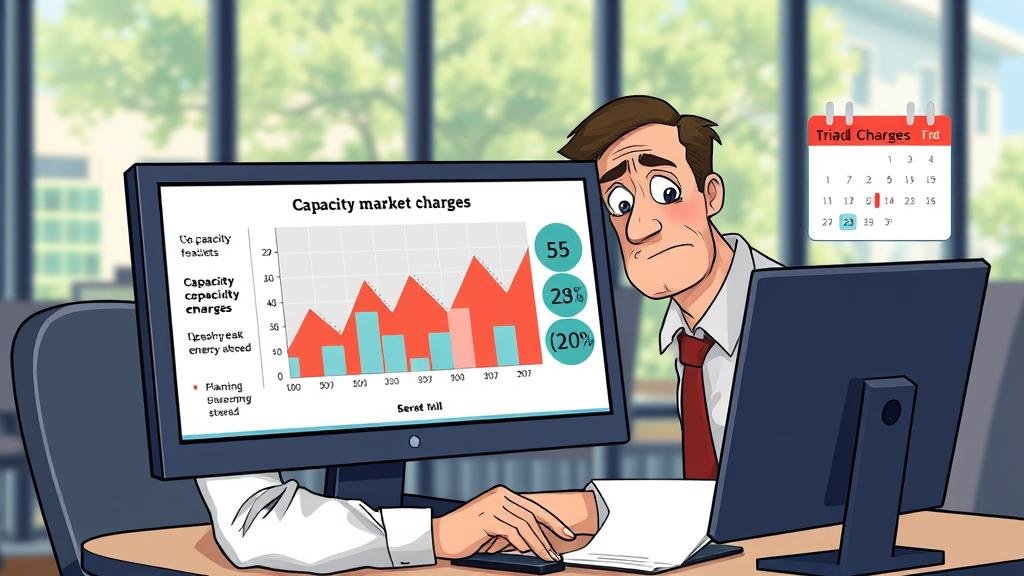
Capacity market charges are composed of two principal components that are levied on businesses across the UK:
- Operational Levy: This is a fixed unit rate charged per kilowatt-hour (kWh) to cover administrative costs. For example, the operational levy might be £0.0015 per kWh.
- Obligation Levy: This levy covers the expenses incurred to secure sufficient capacity for peak demand. It is based on the supplier’s share of demand during specifically designated peak periods, primarily from November to February, between 16:00 and 19:00.
Understanding these components can help businesses anticipate their energy charges and identify areas for potential savings (Energy Consumption Data Analytics).
What are Triad Charges?
Triad charges are network charges incurred during the three half-hour periods of highest system demand in the winter months. They are distinct from capacity charges yet play a similar role by encouraging consumers to manage their energy usage wisely.
How Triad Charges Are Calculated
The calculation of triad charges revolves around how much energy you consume during these peak periods. For businesses, this is done through:
- Taking the maximum demand (in kW) during the triad periods.
- Multiplying that demand by the regional tariff rate established by the local Distribution Network Operator.
Differentiating Triad Charges from Capacity Charges
While triad charges focus specifically on peak usage times, capacity market charges are more broadly based on overall market dynamics. This means:
- Triad charges are designed to incentivize consumers to reduce their demand during specific high usage windows.
- Capacity market charges are often spread out based on a supplier’s market share during high-demand periods.
How Triad Charges Impact Business Bills
For many businesses, especially those with high energy consumption during peak times, triad charges can significantly inflate monthly energy bills.
An Example Scenario
Consider a business that consumes a maximum of 600 kVA during these critical triad periods. This could lead to significant charges. Suppose this equates to £900 monthly; this situation highlights the necessity of closely monitoring usage patterns and implementing strategies to lower consumption during these high-cost windows (Commercial Energy Audits: A Guide for UK Businesses).
Triad Warning Systems
To help manage peak demands, companies can benefit significantly from triad warning systems.
How Triad Warning Systems Operate
These systems utilize historical grid data combined with real-time demand forecasts. They predict when triad periods are likely to occur and send alerts to businesses, allowing them to adjust their energy usage accordingly.
The Importance of Staying Informed
Learning how to stay informed about triad periods plays a crucial role in reducing high charges. Businesses should consider:
- Subscribing to their energy suppliers’ triad alert services.
- Utilizing market tracking tools that provide timely notifications when key triad periods are approaching.
Avoiding Peak Demand Charges
Many businesses can adopt strategies to circumvent hefty peak demand charges effectively.
Strategies for Management
- Shift Operations: Adjust energy-intensive processes to off-peak hours whenever feasible.
- Implementing Demand-Side Response (DSR): This involves adapting energy demand to align with supply flexibility.
- Utilizing Intelligent Systems: Advanced technologies and systems can monitor and manage energy consumption patterns, optimizing usage and reducing demand during peak periods (Energy Management Software UK).
By leveraging these approaches, businesses can significantly mitigate their exposure to peak demand charges.
Reducing Charges During Peak Times
To proactively reduce overall energy consumption during peak hours, several practical methods can be utilized:
Energy Efficiency Tips
- Invest in Energy-Efficient Technologies: Upgrading to modern, energy-efficient equipment can yield substantial savings.
- Battery Storage Solutions: Consider implementing battery storage to offset grid consumption during critical periods (Commercial Battery Storage UK: Enhancing Business Efficiency and Sustainability).
- Continuous Monitoring: Regularly reviewing the Authorised Capacity level helps ensure businesses are not overpaying compared to actual needs.
Adjusting Consumption During High-Cost Periods
Careful monitoring and adjustment of energy usage can lead to considerable savings on energy bills during critical times.
Conclusion
Understanding capacity market charges UK and triad charges is essential for managing energy costs effectively. For businesses grappling with energy bills, recognizing these charges and employing proactive energy management techniques can alleviate financial strain. By minimizing exposure to spikes in demand and incorporating energy-efficient practices (Business Energy Efficiency Tips), businesses can navigate the complexities of the UK energy market more smoothly.
Call-To-Action
We invite you to share your experiences with capacity charges in the UK. How have you managed to mitigate these costs in your business? Additionally, don’t forget to explore available resources and tools provided by suppliers or industry organizations to better manage your energy costs. Join the conversation, and let’s foster a community dedicated to smarter energy management!
Frequently Asked Questions
What are capacity market charges and how do they affect my business?
Capacity market charges are fees levied on businesses to ensure there is sufficient electricity capacity during peak times. These charges can significantly impact your energy bills, especially if your business has high energy consumption during peak periods.
What are triad charges for businesses?
Triad charges are network fees imposed during the three periods of highest electricity demand in a region during the winter months. For businesses, the amount charged depends on their electricity usage during these peak times, potentially leading to higher energy costs if not managed effectively.
How can my business reduce capacity market and triad charges?
To reduce these charges, businesses can implement energy management strategies such as shifting energy-intensive operations to off-peak times, investing in energy-efficient technologies, utilizing intelligent monitoring systems, and participating in demand-side response programs. Additionally, subscribing to triad warning systems can help monitor and adjust usage during critical periods.
What resources are available for managing energy costs related to capacity and triad charges?
Businesses can access a variety of resources including energy audits, energy management software, and advisory services provided by energy suppliers and industry organizations. These tools and services help businesses analyze their energy consumption patterns, identify savings opportunities, and implement effective energy management practices.